The First International Colloquium “Fidel: Legacy and Future” begins this Monday at the Havana Convention Center, as part of the program of activities commemorating the centennial of the birth of the historic leader of the Revolution
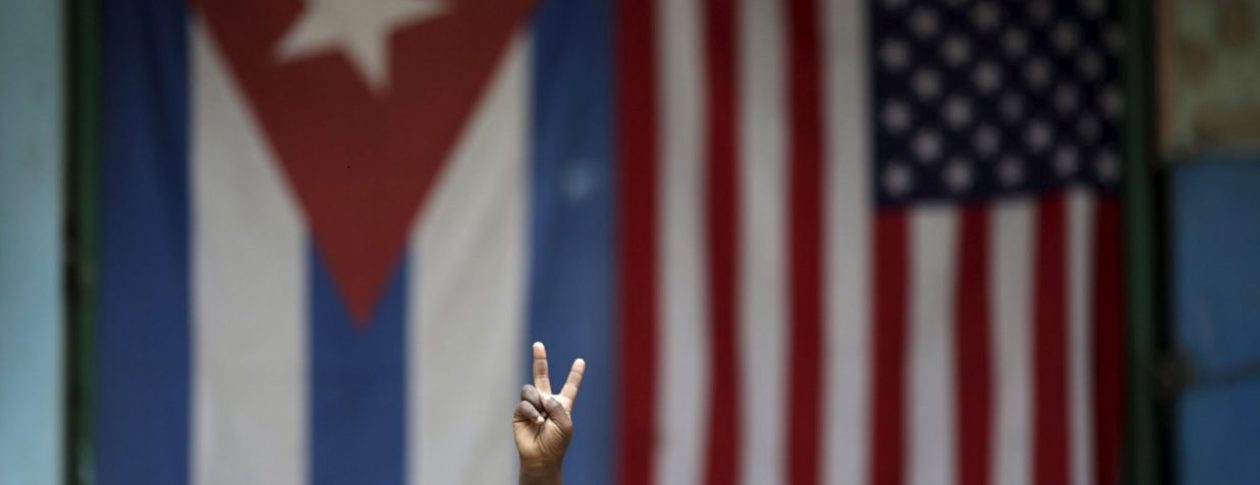
What is most sacred resides on the left side of our chest. Photo: Dunia Álvarez
Havana will host the First International Colloquium “Fidel: Legacy and Future” from this Monday until August 13th. This event, convened by the Fidel Castro Ruz Center, along with Cuban academic and cultural institutions, aims to foster the exchange of ideas about the work and thought of the Commander-in-Chief, on the one hundredth anniversary of his birth.
Historians, researchers, academics, social and political leaders, diplomats, journalists, students, and friends of Cuba from around the world will participate in four days of discussions that will explore the enduring relevance of Fidel Castro’s legacy and its application to the challenges of the present and future.
The program includes a meeting of Fidel Castro Ruz Chairs and a symposium dedicated to the Cuban Revolution, as well as sectoral forums for youth, women, parliamentarians, and artists, intellectuals, and social movements in defense of humanity.
Among the topics that will be the focus of the sessions are Fidel Castro’s political, social, internationalist, and humanistic thought; his influence on national liberation movements, the Global South, and the geopolitics of the 20th and 21st centuries; and the continued relevance of his ideas in the face of imperialism, inequality, climate change, and the defense of peace and the sovereignty of nations.
More than a look back at the past, the meeting aims to place Fidel’s ideas in dialogue with contemporary challenges and contribute, through international exchange, to keeping his thinking alive as a reference point for the struggles for social justice, sovereignty, solidarity, and peace.
Cuba doesn’t have to indoctrinate anyone. It doesn’t have to export ideas. History teaches us lessons
The total suffocation to which we are subjected constitutes a collective punishment that seeks, through the deprivation of the most basic resources and services necessary for survival, to promote weariness, discouragement, and social division, with the aim of destroying the Cuban socialist project
Closing Ceremony of the 24th International Meeting of Communist and Workers’ Parties Photo: Estudios Revolución
Speech delivered by Miguel Mario Díaz-Canel Bermúdez, First Secretary of the Central Committee of the Communist Party of Cuba and President of the Republic, at the closing ceremony of the 24th International Meeting of Communist and Workers’ Parties, at the Convention Palace, on August 8th, 2026, “Year of the Centennial of Commander-in-Chief Fidel Castro Ruz”
(Shorthand Versions – Presidency of the Republic)
Comrades of the communist and workers’ parties of the world;
Dear Comrade Kemal Okuyan;
Brothers and sisters from all corners of the world who honor us with your presence in this rebellious capital today:
It is an honor to have celebrated this meeting in the context of Fidel Castro’s Centenary, whose undeniable legacy calls us to confront the enormous challenges of this turbulent and threatening present we are living through.
Cuba, island of dignity and historical resistance against imperialism, and today also against fascism, welcomes you with open arms and thanks you for your courage and determination in coming here, amidst so much pressure, blackmail, and lies.
At the previous meeting in Havana, in October 2022, representatives of communist and workers’ parties from more than 60 countries, who gathered at that time, agreed to warn about the dangerous situation humanity was facing. Almost four years later, we can reaffirm, without a doubt, that the world is going through one of its most uncertain and dangerous periods.
We are living through a period of extreme intensification of capitalist contradictions: excessive concentration of wealth in the hands of a few, inequalities in its distribution, environmental destruction, and wars fought over markets, resources, and spheres of influence.
Marxist-Leninist analysis remains fully relevant in asserting that these crises are not accidents, but rather the result of the laws governing the development of monopoly and imperialist capitalism.
Capitalism, consumed by its own contradictions, has unleashed a perfect storm: wars of aggression in Eastern Europe and the Middle East; open genocide in Gaza; a climate crisis that is no longer a warning, but a reality; structural hunger that devours millions; and an external debt that the peoples of the Global South will never be able to repay, because it was conceived to enslave us, not to develop us.
In this scenario, the resurgence of fascism sends us a stark warning. Fidel warned us about this years ago, about how it was transforming its appearance, but maintaining its essence. Today we denounce the reestablishment of fascist regimes around the world.
Nationalism, hegemony, supremacy, and racial discrimination; xenophobia, displacement, and population extermination; wars of conquest for territories and natural resources; punishments that fall upon millions of human beings; and the proscription of ideologies and civil liberties are unmistakable features of this current fascism and its Hitlerian predecessor
Human Rights Council experts condemn U.S. blockade of Cuba
The United Nations demanded that Washington cease all threats and hostile acts against the island’s sovereignty
Children, the elderly, and other vulnerable groups are the most affected by the blockade of Cuba. Photo: Juvenal Balán
Independent Experts and Special Rapporteurs of the UN Human Rights Council condemned on Thursday the unilateral coercive measures applied by the United States against Cuba, which they described as an attempt to alter the constitutional order of a sovereign state through threats and coercion, the multilateral body reported.
From Geneva, the experts called on the international community and civil society to act swiftly to prevent the establishment of a “silent Gaza” on the island as a result of U.S. hostility.
The imposed blockade means that energy, transportation, irrigation, and basic services are failing simultaneously, disproportionately affecting women, children, the elderly, and other vulnerable groups, they asserted.
The statement issued denies that Cuba poses a threat to the national security of the United States and hemispheric stability, as the State Department report published on July 20th, entitled “Cuba, the Capital of 21st-Century Communism,” attempts to portray.
Deliberately depriving a population of the means to survive violates the most basic guarantees of the right to life and undermines the very essence of human dignity, the experts acknowledged.
They also stated that it is the duty of the U.S. government to cease all threats and hostile acts against Cuba’s sovereignty and to revoke all measures it has imposed on the country, which they denounce as contrary to international law.
“The Security Council and the General Assembly should urgently address these threats as a matter of international peace and security,” they stressed.
The day before, the Deputy Spokesperson for the UN Secretary-General confirmed that his organization is in contact with several countries to facilitate the supply of fuel to Cuba for humanitarian purposes.
According to Ernesto Soberón, Cuba’s Permanent Representative to the United Nations, the official also expressed concern about the humanitarian impact of this collective punishment imposed by the U.S. government against the Cuban people.
Fidel, the Book Fair, and the Cuban Publishing Legacy
The role of the Commander-in-Chief in promoting reading is the central theme of the book Fidel and the Cuban Publishing Industry: A Revolution Through Literature
Fidel was convinced of the importance of disseminating literary works and fostering a love of reading. Photo: Juvenal Balán
“It constitutes a great challenge for all those involved in its organization (the 34th Havana International Book Fair), due to the crisis the country is facing as a consequence of the measures taken by the United States government,” said Juan Rodríguez Cabrera, president of the Cuban Book Institute, during the press conference for the event.
This statement aligns with Fidel Castro’s belief in never giving up in the face of adversity. One example is his work, beginning in 1959, in the process of transforming Cuban publishing houses to disseminate literary works, finding a country marked by a fragile publishing industry.
The cultural event will take place in Havana, with its main venue at the Cultural Station on Línea and 18th Streets, and Russia as the guest of honor. It will also include the participation of Mexico, China, Argentina, Venezuela, Brazil, Spain, among other countries.
In the pages of the book Fidel y la industria editorial cubana: una Revolución desde las letras (Fidel and the Cuban Publishing Industry: A Revolution from Literature), by Francisca López Civeira and Fabio Fernández Batista, one can find information regarding the thinking and strategies adopted by the historical leader to contribute to the improved functioning of publishing houses in the country.
The authors begin with an overview of the situation before 1959 regarding reading, with illiteracy as a fundamental issue due to the low level of education. During this period, intellectuals lacked coherent mechanisms for disseminating their work. The scarcity of funds for the promotion of science, the humanities, and literature was an undeniable reality. The space that the press afforded creators was, without a doubt, insufficient.
The authors perfectly reflect Fidel’s desire to do something immense regarding education, and how the role of the book in this mission stemmed from his love of literature and his conviction of the importance of disseminating literary creation and fostering the habit of reading among all sectors of the population.
In the year of his centennial, we cannot forget when, in a 1985 interview, he highlighted his fondness for historical novels and books dealing with history, biography, nature, and fiction.
Education and culture were, for him, two pillars of the revolutionary process. “The future of our homeland must necessarily be a future of men and women of science, it must be a future of men and women of thought,” he declared in a speech on January 15, 1960, at the Cuban Speleological Society.
Ambrosio Fornet (1932-2022), a Cuban writer and researcher, compared the pre-revolutionary Cuban publishing landscape to a “wasteland dotted with a few islets of vegetation.” For him, only the work of spontaneous editors like Fernando Ortiz, Emeterio Santovenia, and Samuel Feijóo prevented the landscape from being completely desolate.
Another important fact is that major literary figures such as Alejo Carpentier, Lino Novás Calvo, Virgilio Piñera, and Dulce María Loynaz were unable to publish their first works in Cuba.
Currently, our country boasts publishing houses for all tastes, such as Casa Editora Abril, Gente Nueva, Verde Olivo, Cubaliteraria, Capitán San Luis, Letras Cubanas, Arte y Literatura, Ediciones ICAIC, and Editorial José Martí, among others.
This year’s Cuban Book Fair carries within it the spirit of Fidel Castro, both in the fight against current adversities and in the works that will be presented. Among the titles about the Commander-in-Chief are Fidel, Always a Lawyer and Fidel Castro: What Did He Find After the Triumph of the Revolution?
As the President of the Cuban Book Institute aptly put it, “We organized it (the 34th FILH) with the spirit that the Fair created by Fidel will not die.”