Cuban Foreign Minister begins official visit to China
The member of the Political Bureau of the Central Committee of the Communist Party of Cuba and Minister of Foreign Affairs, Bruno Rodríguez Parrilla, arrived in the People’s Republic of China for an official visit that will take place from today until June 9th
Photo: Cubaminrex
Member of the Political Bureau of the Central Committee of the Communist Party of Cuba and Minister of Foreign Affairs, Bruno Rodríguez Parrilla, arrived in the People’s Republic of China for an official visit that will last from June 5 to 9.
During his stay and as part of his agenda, the Cuban diplomat will hold official talks with the country’s leaders and high-ranking officials.
The Cuban delegation is also composed of the director general of bilateral affairs of the Ministry of Foreign Affairs, Carlos Miguel Pereira Hernández; the director for Asia and Oceania, Ariel Lorenzo Rodríguez; and the ambassador to the Asian nation, Alberto Blanco Silva.
The First Secretary of the Central Committee of the Communist Party of Cuba and President of the Republic, Miguel Diaz-Canel Bermudez, congratulated the newly elected President of Mexico, Claudia Sheinbaum
Photo: Taken from President Miguel Díaz-Canel’s X account.
The First Secretary of the Central Committee of the Communist Party of Cuba and President of the Republic, Miguel Díaz-Canel Bermúdez, congratulated the newly elected president of Mexico, Claudia Sheinbaum, with wishes for success in her administration and the willingness to continue strengthening the intimate brotherhood that unites our peoples.
In his account in the social network X, Díaz-Canel expressed that, through a phone call, he conveyed his admiration and sympathy for the victory.
In the same social network, Sheinbaum responded to Díaz-Canel, and affirmed that Mexico and Cuba are sister nations, united by ties of cooperation, solidarity and shared history.
President Nicolás Maduro of Venezuela also highlighted the extraordinary demonstration of civic-mindedness and democracy that took place in Mexico on Sunday.
The President of Colombia, Gustavo Petro, highlighted that “Mexico elected a progressive as the first female president in its history. It is a triumph for the Mexican people and for its democracy, congratulations to my friend Claudia Sheinbaum, together we will work to see Latin America united and progressing”.
Like him, other presidents sent messages of congratulations for the victory, through their X accounts.
President Nicolás Maduro of Venezuela highlighted the extraordinary demonstration of civility and democracy that was experienced in Mexico this Sunday. “I congratulate this noble people, its President Elect Claudia Sheinbaum, the Morena Party, the PT and the Social Movements,” he wrote.
On the other hand, also Russian Deputy Foreign Minister Sergei Riabkov congratulated Sheinbaum on her “impressive success” in Mexico’s presidential election. “We express hope that with the new Mexican leader our relations will further develop and gain new momentum,” he wrote on social networks.
The representative of the coalition of the National Regeneration Movement (Morena), Labor and the Green Ecologist grouping parties, became the first woman to win the Presidency of Mexico, by obtaining between 58.3% and 60.7% of the votes in the general elections.
Sheinbaum became the first woman to win Mexico’s presidency by winning between 58.3 and 60.7 percent of the vote in the election held the day before.
Cuba at the St. Petersburg International Economic Forum-SPIEF 2024
Deputy Prime Minister Ricardo Cabrisas Ruiz heads the delegation of the largest of the Antilles
Photo: Prensa Latina
The arrival in the Russian Federation of Cuban Deputy Prime Minister Ricardo Cabrisas Ruiz responds to an official invitation for Cuba’s participation in the St. Petersburg 2024 International Economic Forum.
The event, convened under the theme The basis of a multipolar world: formation of new points of growth, will be attended by more than 17,000 people from 136 countries.
The agenda of the Cuban delegation, according to a press release, will promote the expansion and diversification of economic, commercial, financial and cooperation relations between Cuba and Russia, considered by the leaders of both countries as allied relations.
In this regard, contacts will be held with official and business counterparts related to the main issues of the bilateral agenda and the agreements adopted to achieve the effective participation of the Russian Federation in Cuba’s National Economic and Social Development Plan until 2030.
There will also be a meeting of co-chairs of the Intergovernmental Commission for Economic-Commercial and Scientific-Technical Relations, where, together with the Vice President of the Russian Government, Dmitry Chernyshenko, the Cuban Deputy Prime Minister will review the fundamental issues dealt with by this bilateral mechanism.
The Cuban delegation is also made up of the Minister of Transport, Eduardo Rodríguez Dávila; Ambassador Julio Garmendía Peña; the First Deputy Minister of Foreign Trade and Foreign Investment (Mincex), Carlos Luis Jorge Méndez; the director of Europe of the Foreign Ministry, Ileana Núñez Mordoche, and the director of Commercial Policy with this region of the Mincex, Inalvis Bonachea González.
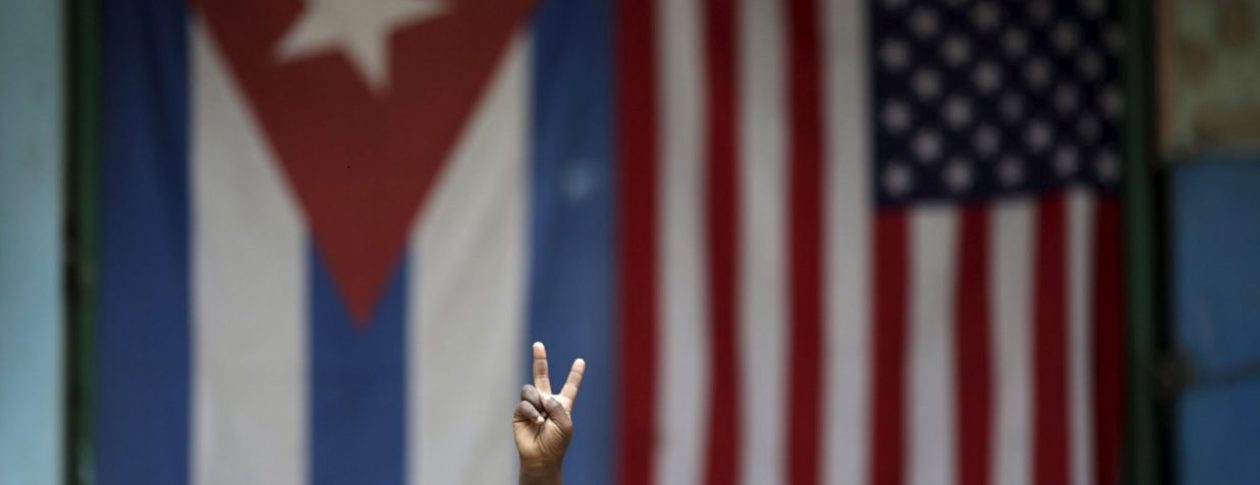
The Cuban government will study the most recent U.S. measures and, if they do not violate national legislation and mean an opening that benefits the Cuban population, even if only a segment, it will not hinder their implementation
Photo: Cubaminrex
On May 28, the U.S. Government finally announced a set of measures to put into effect its May 16, 2022 announcements. The objective of this step, according to the text published by the Office of Foreign Assets Control (OFAC), is to favor the private sector in Cuba.
The measures are limited and do not touch the fundamental body of the blockade against Cuba nor the additional sanctions that make up the policy of maximum pressure. Once again, the US government’s decision is based on its own distorted vision of the Cuban reality, by artificially separating the private sector from the public sector, when both are part of the Cuban business system and of society as a whole.
With this announcement, the U.S. Government intends to target only one segment of our population. It does not eliminate or modify the coercive measures that today most affect the Cuban economy and public services and that severely damage the well-being of our entire population.
If the announced measures are implemented, the United States seeks to put the private sector, which has been legally established and has grown under the measures taken in a sovereign act by the Cuban Government in consultation with the Cuban people, at an advantage. The same has happened with Internet access established and expanded by Cuba despite the obstacles of the blockade and restrictions to prevent free access to hundreds of tools and websites.
The U.S. government has been explicit in its intention to use this sector for political purposes against the Revolution, depending on its regime change objectives.
Even if this is a capricious selectivity, both the public and private sectors will continue to suffer the consequences of the blockade and the absurd inclusion of Cuba in the list of States that allegedly sponsor terrorism.
The coercive measures that make up the economic blockade will remain in force with cruel effect on the entire Cuban population. It is evident that the U.S. ratifies its will to punish Cuba’s state sector, knowing that it provides essential services such as education, health, culture, sports and others to all Cubans, including the private sector; and that it is the guarantee of social justice and equity among citizens. For this reason, recent measures were taken by the U.S. Government to persecute Cuba’s international medical cooperation and documents have been published that reveal that it is continuing its efforts to deprive us of income and destabilize the country for political purposes of domination.
The Cuban Government will study these measures and, if they do not violate national legislation and mean an opening that benefits the Cuban population, even if only a segment, it will not hinder their implementation.
Havana, May 28, 2024