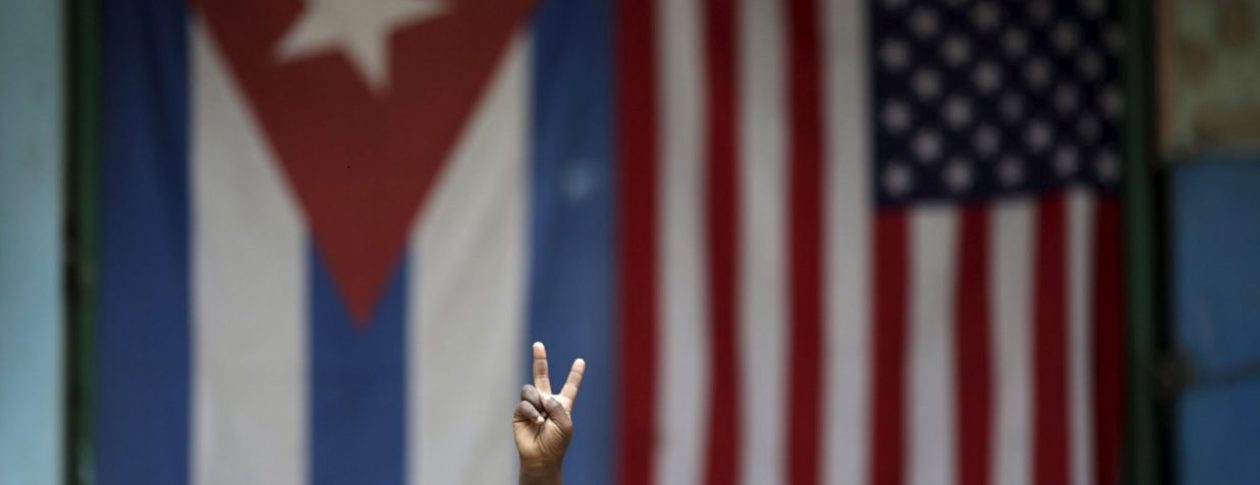
Tomorrow, at 7:30 a.m., in Havana’s Tribuna Antimperialista, and in the country’s squares, Cuba will be one voice against the crime in Gaza
Four trucks, with flour and other products, approach, but over the crowded multitude, with more hunger than hope, suddenly it rains shrapnel. Airplanes appear, and tanks shoot and pass their mats, even over the bodies of the wounded and dead.
Such a scene, as Dantesque as it is unimaginable, occurred yesterday in the Gaza Strip. At the end of the carnage, 112 dead bodies and more than 700 wounded in the blitzkrieg offensive of the Israeli forces against starving Palestinians.
There seems to be no salvation for a people that is being massacred before the eyes of a world that watches in astonishment, but does not act to stop the crime. More than 30,000 people have been killed and 60,000 wounded since the Zionist government began its attacks.
It will be like this as long as the UN Security Council does not pass a resolution to put an end to the massacre – vetoed today by the US – it will be like this until the International Criminal Court orders a cease-fire. Will it be?
Thursday’s was a crime against starving children waiting for a plate of food, or a glass of water to quench their thirst. Hispantv called it a “slow motion massacre”. The blockade to the entry of humanitarian aid puts more than 1,100,000 children on the brink of death, according to the NGO Save the Children.
While this was going on, U.S. Defense Secretary Lloyd Austin told Israel’s Defense Minister Yoav Gallant that he was “very concerned about the negotiations for the release of the Israeli hostages”.
With abhorrent cynicism, Israel’s National Security Minister, Itamar Ben-Gvir, commented in x that “full support should be given” to the “heroic fighters” of the Israeli Armed Forces operating in the area, who “performed excellently against a mob in Gaza that tried to harm them,” RT quoted him as saying.
And still there are those who question it: Israel is reprising the horrors of the greatest known holocaust.
With the condemnation of the genocide against the Palestinian people and the proposal of initiatives for coordinated action in pursuit of just causes, the Second International Meeting of Theoretical Publications of Left Parties and Movements concluded in Havana
Photo: Prensa Latina
A declaration of solidarity with Palestine, which condemns the clear violations of human rights committed by Israel in the Gaza Strip, and denounces the genocide against that people, and their forced displacement, as well as the complicity of imperialism in such crimes, marked the final day of the Second International Meeting of Theoretical Publications of Left Parties and Movements, which concluded yesterday in Havana.
In the wide-ranging debates held by 97 foreign delegates and 59 Cubans, from 43 organizations and 36 media, the formation of a collective thinking on the essential aspects that occupy the left in the world was stimulated.
Enrique Ubieta Gómez, director of the Cuba Socialista magazine and coordinator of the event, alluded, in his summary remarks, to significant issues that marked the meeting, such as the confrontation to cultural colonialism and the challenges of leftist youth in times of neo-fascism.
Ubieta referred that the call is to unity in the face of the great global problems, to the unity of the oppressed, which is strengthened from the diversity and plurality of the left movements, and the participation and criticism to find the necessary paths.
In this purpose of articulating a “symbolic common front”, some proposals were to create a permanent mechanism of work between meetings, which Cuba will cover; to establish a network that systematizes the diversity of publications, and a repository of contents; to create an international advisory council; and to stimulate cooperation between universities, research centers and organizations.
Rescuing the memory of Marxism, keeping revolutionary paradigms alive, denouncing blockades, and supporting just causes and struggles were other aspects mentioned by Ubieta, who recalled the need to generate confidence and certainty that a better world is possible and essential.
Cuba will continue to be the rebellious, dignified and sovereign island on which humanity can continue to count on
Speech by the member of the Political Bureau of the Communist Party of Cuba and Prime Minister of the Republic, Manuel Marrero Cruz, at the World Summit of Governments, held in the United Arab Emirates, on February 12, 2024.
Photo: Estudios Revolución
Distinguished authorities of the United Arab Emirates and the Emirate of Dubai,
Dear heads of government delegations, guests and representatives of other sectors,
On behalf of the Cuban delegation, I thank the warm hospitality of the people and Government of the United Arab Emirates and the opportunity to participate in this new edition of the World Summit of Governments.
Excellencies,
Humanity has reached an unimaginable scientific and technical potential; however, never before has the world been so unequal and inequality so deep.
A new, more just, democratic and equitable international order could ensure decent living standards for present and future generations.
The current multidimensional crisis in the world is aggravated by geopolitical conflicts and wars for the control of natural resources, which are serious threats to human survival.
In this context, Cuba reiterates its solidarity and unwavering support for the brotherly Palestinian people in the face of the genocide being committed in their illegally occupied territories.
Distinguished delegates,
Science, technology and innovation must be essential components of the political debate associated with development.
The Summit of Heads of State and Government, held in September 2023 in Havana, under the Cuban presidency of the G-77 and China, achieved a substantive debate on the transcendental role of science, technology and innovation in the context of today’s enormous development challenges.
The final Declaration adopted at the Summit includes a set of practical actions to address these pressing problems from a Southern perspective.
The recent summit in Havana and this summit in Dubai have important points of convergence, which we must build on and enhance.
Distinguished colleagues:
Digital transformation must be developed to respond to the needs of our peoples.
Financing is required for investments in infrastructure, services, training and technology transfer without conditionalities, which increase the capacity for science, technology and innovation of our countries.
Within this framework, Artificial Intelligence must be a facilitator and promoter of sustainable development. It must help to promote equality between men and women, and the promotion of human rights.
It is also necessary for all actors to be aware of the ethical dimension of the use of these technologies and to encourage global debates on their regulatory framework, international governance and other key issues.
Artificial Intelligence will have an increasing impact on all aspects of our lives and we need to prepare for it.
We are entering a new era that offers enormous possibilities, but also great challenges that have not yet been fully addressed.
For example, it is imperative to prevent Artificial Intelligence and Information and Communications Technologies from being used for criminal purposes, discrimination, hate speech and violence, among other scourges.
Another challenge to overcome is the high concentration of advanced digital production technologies. Only ten economies are responsible for 90% of all world patents in this area.
The increasing privatization of knowledge must stop, as it poses limitations to progress and scientific solutions to problems, in addition to aggravating the socioeconomic conditions of developing countries.
Excellencies:
I would like to briefly refer to Cuba’s experience and challenges in some of the issues that summon us here.
We have consolidated a system based on science and innovation, in all fields, as fundamental pillars of the government’s management in Cuba.
This entire system provides for a systematic dialogue between scientists, experts and academics with the Government, as well as interaction with other social actors to ensure that science and innovation fulfill the social functions that the country requires for its development.
In addition, our country has been promoting education in a sustained manner, particularly higher education, and has great scientific and technological potential and capabilities.
The challenge of the pandemic demanded from the country the strengthening of technological sovereignty, particularly in the field of Health, which bore fruit, as its best expression, with the creation of three Cuban vaccines and two other vaccine candidates against COVID-19.
We were victorious in that hard fight and were able to support other countries, both with vaccines and with specialized human resources.
We have done all this under very difficult conditions. For our country, the task of development is especially hard. The economic, commercial and financial blockade of the United States against Cuba has just completed 62 years. It is the greatest obstacle to our development and a flagrant and systematic violation of the human rights of our people.
I take this opportunity to thank, once again, the solidarity of the peoples and governments of the world in our struggle against the blockade.
In spite of all the obstacles, we will continue to carry out the necessary transformations in the economy and society.
We are working on strengthening the entrepreneurial system, increasing agricultural production, diversifying the economic actors with the creation of micro, small and medium-sized private enterprises, and a broad legislative update, among other actions, as part of the implementation of the Government’s projections to correct distortions and boost the economy.
In parallel, social innovation policies associated with increasing popular participation in the conduct of public affairs are being developed to fight inequalities and promote greater social justice.
Excellencies:
We have the most absolute conviction that it will not be possible to advance towards a sustainable way of life, in harmony with nature, without promoting international solidarity as a human right and, within it, cooperation and complementarity as basic premises.
It is unacceptable that, in the midst of the most colossal scientific and technological development of all times, the world has gone back three decades in the reduction of poverty and hunger.
We cannot seriously speak of technological progress or equitable access to communications when more than 84 million children are still out of school and more than 660 million people have no electricity.
Excellencies:
I invite you to work for a world of peace, which will allow for the full development of our societies.
Our Government will continue to promote solidarity, complementarity, cooperation and dialogue among peoples to show that a better world is possible.
Cuba will continue to be the rebellious, dignified and sovereign island, with which humanity can continue to count on to demonstrate that Yes we could, yes we can, and we always can!
Alice Walker, the famous American writer and tenacious activist, received at Casa de las Americas, by Presidential Decree, the Haydee Santamaría Medal
In a friendship meeting between Cuban and American artists and writers at Casa de las Americas, the Minister of Culture Elpidio Alonso presents the Haydee Santamaria Medal to Allice Walker. Photo: Ismael Batista
To the example of that young Haydee who, before her brother’s torn eyes, said that if he had not spoken, she would not speak either, and she did not speak, alluded the writer and activist Alice Walker, just moments after receiving, this Wednesday, at Casa de las Americas, the Haydee Santamaria Medal, which was awarded to her by Presidential Decree.
“Haydee’s attitude is a reference to move forward in these times,” said the author of The Color Purple, and also confessed to feeling fortunate to have come so many times to Cuba and to see that the nation does not give up. Her people and their dreams will be eternal, “we will go forward and we will triumph,” she said.
Among the reasons put forward to distinguish Walker with this medal -at the proposal of the Cuban Minister of Culture, Alpidio Alonso- were mentioned the permanent claim of the Pulitzer Prize winner for the end of the U.S. blockade of the island; and her work in the links with our people, based on brotherhood and solidarity in the cultural and political spheres.
Likewise, the merits of her literary works were highlighted, in which she has honestly addressed the issues of racial and gender inequality.
Before the delegation of around 70 Americans visiting the country, related to the progressive cultural organization Busboys and Poets, based in Washington, the poet and essayist Nancy Morejon, National Literature Award, highlighted Walker’s indomitable character, and his life dedicated to the struggle for a better world and understanding among peoples.
On the occasion, she also praised Walker’s influence on Cuban writers through his literature and his civil commitment; and his long years of dedication to the Palestinian cause.
“Alice is at home, the home of all”, said Nancy, who added that this was not just a simple meeting, because both peoples are a family, and that is precisely the concretion of the Casa’s cultural project.
The visitors received a wide explanation of the programs and lines of the institution, through some of its professionals and collaborators; among them, Luisa Campuzano, Zuleica Romay and Víctor Fowler. The Minister of Culture and Abel Prieto, president of Casa de las Americas, were in the auditorium.
Fidel’s legacy, literacy and the cultural battle, and the relationship with Puerto Rico, transcended in the dialogue, in which members of the delegation asked how they could help break down barriers.
Jaime Gomez, vice president of that cultural center, urged them to consider themselves part of the Casa’s endeavors, for as Haydee said, the real workers there are the artists of the continent