Cuban foreign minister: Warming with US is irreversible

World
Cuban foreign minister: Warming with US is irreversible
Associated Press IAN PHILLIPS and MICHAEL WEISSENSTEIN,Associated Press 1 hour 54 minutes ago

Cuban Foreign Minister Bruno Rodriguez Parrilla talks during an interview with The Associated Press, Tuesday, Oct. 1, 2019 in New York. The foreign minister says he believes improvements in relations with the United States are irreversible despite the Trump administration’s hardening of the embargo on the island.

fb947c1b645700185ec50fc06f12ea15


(AP Photo/Mark Lennihan)
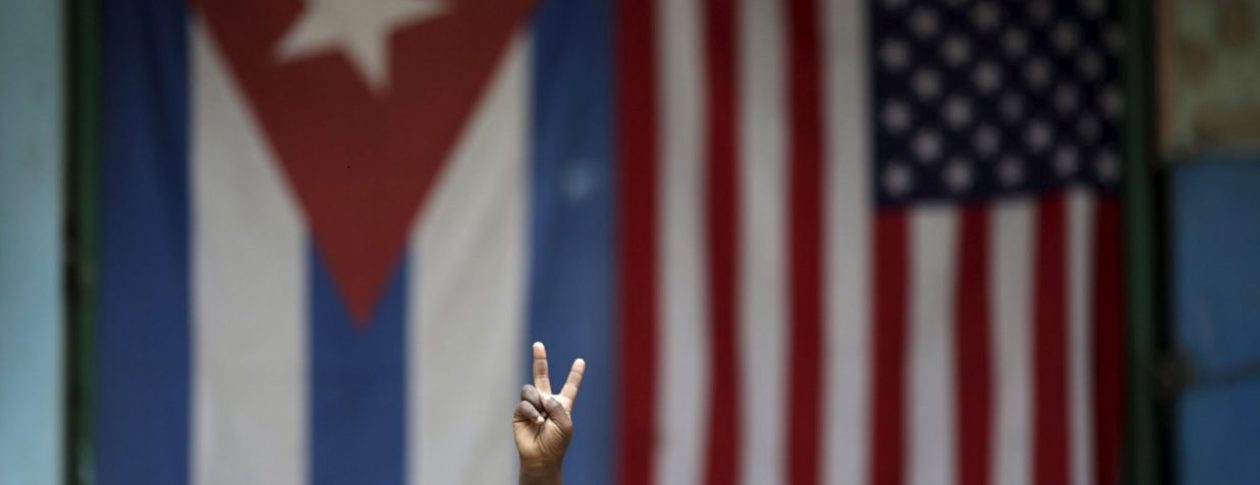
NEW YORK (AP) — Cuba’s foreign minister said Tuesday that he believes improvements in relations with the United States are irreversible despite the Trump administration’s hardening of the embargo on the island.

Foreign Minister Bruno Rodríguez Parrilla told The Associated Press that while the U.S. administration has cut off most communication with Cuba and is trying to pressure the communist government by restricting the flow of oil, progress made under former U.S. President Barack Obama has not been undone.

“I would describe myself as extremely optimistic,” Rodríguez said. “There’s a historical trend that’s irreversible.”

He said relations between the two countries would never return to the way they were before December 2014, when Obama and then-Cuban President Raúl Castro declared that they would reestablish diplomatic relations.

“There have been levels of communication and mutual familiarity between the peoples of both countries that are irreversible,” Rodríguez said.

He said Cuba was prepared for a worsening of tensions during the presidential campaign season because the Trump administration believes that Cuban Americans in South Florida support a hard line on the island.

He called that an “erroneous political calculation.”

“I believe it’s proven that the majority of Cubans in Florida support the advances in the normalization of relations and the lifting of the blockade, and the younger they are, the more they support it,” Rodríguez said. “Regardless, political moments are ephemeral. We have the political will to advance without delay.”

He also says Cuba is finding ways to buy oil despite U.S. attempts to stop it by imposing sanctions on shipping firms and threatening third countries, insurance firms and others with retaliation for helping Cuba obtain petroleum.

Oil shortages led to cutbacks in government fuel consumption and distribution last month, resulting in long lines at gas stations and reductions in public transport.

“We’ve increased our ability to transport (oil). The way the world works today makes it impossible for the United States to impede the arrival of oil tankers in Cuba,” Rodríguez said.

The Trump administration says it is trying to force Cuba to stop supporting Venezuelan President Nicolás Maduro, whom the U.S. says receives military and intelligence help from Cuba.

The Cuban foreign minister flatly denied that his country was providing any military, security or intelligence help to Venezuela, contradicting Trump’s Sept. 24 accusation before the U.N. General Assembly that “Maduro is a Cuban puppet protected by Cuban bodyguards.”

“We don’t have a military presence in Venezuela. We don’t participate or assist military, security or intelligence operations,” Rodríguez said. “The relationship between Cuba and Venezuela is a pretext. … They’re attacking the successful (Cuban) political model, which works, which is a successful economic and social model, because it’s withstood six decades despite the (U.S.) blockade.”

Cuba vs blockade

bloqueo 1 86th plenary meeting Election of five non-permanent members of the Security Council [item 112(a)] (a) By-election (A/71/896) (b) Election of five non-permanent members of the Security Council
Photo: UN-Manuel Elias Photo: 5daysforthecuban5.com
Photo: UN-Manuel Elias

Granma International shares facts and figures from Cuba’s report, presented by Foreign Minister Bruno Rodríguez Parrilla, on Resolution 73/8 of the United Nations General Assembly

The significant negative impact of measures recently adopted by the U.S. to tighten the blockade is not reflected in the following account, since this escalation occurred after the time period analyzed.

OVERVIEW

– Losses April 2018-March 2019: 4,343,600,000 dollars

– Damages accumulated over six decades of this policy, at current prices:

138,843,400, 000 dollars

– Total quantifiable harm caused by the blockade has reached more than:

922,630,000,000 dollars (depreciated as compared to the price of gold)

– Damages caused by exclusion from to U.S. market: 163,108 659

– Damages caused by use of intermediaries in purchases and higher prices in distant markets: 173,210,916

Damages due to increased costs for shipping & insurance: 72,160,602

Potential export income lost: 2,343,135,842

Higher financing costs due to national risk rating: 47,290,204

Prohibitions on use of the U.S. dollar: 85,139,436

Other: 12,535,892

Total: 2,896,581,555

HEALTHThe damage caused by sanctions on Cuba in the field of health is unquestionable. This hostile policy obstructs the acquisition of technology, raw materials, reagents, diagnostic tools, equipment and spare parts, as well as medicines for the treatment of serious diseases like cancer- Between April 2018 and March 2019, damages in this sector amounted to $104,148,178, a figure that far exceeds last year’s estimate of $6,123,498.- Relatives of patient JCHC, with medical history number 68100309926 at the Hermanos Ameijeiras Clinical-Surgical Hospital, who died on June 15, 2018 due to spongiform cardiomyopathy with terminal heart failure, can never forget that if circulatory support had been available from an Impella device, produced by the U.S. company Abiomed, the life of JCHC could have been saved.- The import-export company Medicuba S.A. made requests to 57 U.S. providers to acquire supplies necessary for health. To date, 50 of these have not responded.- Several U.S. companies were contacted for the purchase of novel cancer drugs. Thus far none has responded.- The U.S. corporation Bruker was unsuccessfully contacted for the purchase of spectrophotometers, devices used in laboratories for the analysis of substances and microorganisms.

Photo: José Manuel Correa

FOOD & AGRICULTURE

– The consequences of the blockade in this sector, of vital importance to any nation, have been estimated at a value of 412,230,614 dollars.- Food processing companies import approximately 70% of their raw materials from different markets, including Spain, Brazil, etc. The blockade prevents access to the U.S. market, which is more convenient in terms of prices, proximity, and the wide range of materials and equipment available to modernize production.- Havana Club, one of the most prestigious rum makers in this sector, was denied potential earnings of $41,300,000 by the blockade.

EDUCATION, SPORTS & CULTURE

– The University of Sancti Spíritus was not allowed to purchase 20 Smart Brailler typewriters and auditory accessories from the Perkins company, essential to the training of special education teachers.

– January 23, 2019, the French bank Société Générale de París retained a bank transfer of 7,474 euros from Equatorial Guinea to Cuba, compensation for professional educational services provided.

– Purchases of sports equipment required by official regulations of international federations have been restricted.- The 22nd edition of the Terry Fox Run in Cuba could not be held this year, with the director of this International Foundation informing organizers that the fund could no longer help with the event or continue to support cancer research here.- The Caribbean Baseball Federation has been unable to establish with the U.S. a legal way to pay the prizes won by our players.- The financial persecution of Cuba has made it impossible to collect payment for services provided by the Cubadeportes agency, both for the technical assistance and commercialization of activities in Cuba.- Of 37 artistic companies that could have promoted their work in the United States, only 24 have obtained permission to enter that country.TOURISM– In the tourism industry, damages amount to 1.383 billion dollars. If the blockade did not exist, studies indicate that 35% of all visitors to Cuba annually would be from the United States.- The Cubatur travel agency suffered monetary-financial losses of at least $497,800.- The Havanatur company suffered damages due to the refusal of correspondent banks to process payments; the closing of bank accounts in third countries; the retention of funds; and the cancellation of credit card transactions.

Photo: Julio Martínez Molina

BIOPHARMACEUTICAL INDUSTRY

The Center for Genetic Engineering and Biotechnology (CIGB) reports revenues not received from potential exports to the U.S. of Heberprot-p, the only medication of its kind for the treatment of diabetic foot ulcers. Projecting that if only 5% of U.S. patients with this condition used Heberprot-p annually, income from its export would have reached a value of $103 million in 2018.- The Import-Export Company Farmacuba experienced difficulties in acquiring raw materials for the production of medicines.- The Oriente Pharmaceutical Laboratory Company, affiliated with BioCubaFarma, reported shortages of Vitamin A for its Nutriforte multivitamin, as a result of the blockade, thus limiting production by 78,694,200 tablets.- The delivery of printed aluminum foil for Nicotinamide in the month of March 2019 was affected, and it is possible that production of Dipirona and Alprazolam will be limited in September and October for this reason.

TRANSPORTATION

Total damages in this arena during the analyzed period exceeded 170 million dollars, an increase of more than 69 million with respect to the previous report.- The Caterpillar supplier in the Netherlands prohibited the Dutch company Damen – main supplier of Caterpillar and Cummings spare parts for the Damex shipyards in Santiago de Cuba – from selling its products to Cuba, necessary for the repair and maintenance of pilot boats and tugs.- Cubana de Aviación is unable to use the services of the company ATCO, which is responsible for publishing the air fares of more than 500 airlines.- The Spanish airline Air Europa (UX) refrained from specifying the “Shared Code Agreement” and fulfilling its commitment to Cubana Airlines.

INDUSTRY

– The blockade’s impact on Cuban industry caused losses of 49 million dollars, which could have been used to acquire necessary raw materials.- The construction sector continues to face serious difficulties in acquiring more efficient, lightweight technologies that require less energy and materials.- The chemical industry state enterprise group, GEIQ, was unable to acquire spare parts or replace machinery.Communications, Information Technology & Telecommunications- The economic damages caused to the communications system are estimated at more than 55 million dollars. Cuba’s telecommunications company Etecsa continues to feel the greatest impact.- The blockade policy limits the Cuban people’s access to content available on the Internet.- Cuba is denied access to official information from top-of-the-line technology sites, making professional development and distance training difficult.- The blockade obstructs access to high-performance brands and equipment from leaders in the telecommunications industry.

ENERGY AND MINES

Damages in this area amount to 78,336,424 dollars, an increase of more than 18 million over the last period analyzed.- Cuba’s national electrical company continues to face very limited access to spare parts for Bazan engines, manufactured by the Spanish company Navantia.- The British Compair Consortium, upon becoming part of a U.S. group, cut all relations with projects using its technology in Cuba for the centralized management of compressed air.- In September and November of 2018, two contracts were signed with General Electric International for the additional supplies of turbines at the Antonio Guiteras Thermoelectric Power Plant and for modernization of the Pico Santa Martha Power Plant. However, on February 5, 2019, a notification was received from the U.S. Centennial Bank, stating that, given the activation of Title III of the Helms-Burton Act, financing for these two contracts would not be granted.

FOREIGN TRADE

Total damages caused by the U.S. blockade in the area of foreign trade were valued at 2,896,581,555 dollars, given an increase in incidents that hinder the conducting of international commercial activity.- The greatest effect was evident in lost income from exports of goods and services, reaching 2,343,135,842 dollars. The decreased number of U.S. travelers visiting the island during this period had a significant impact.- Damages caused by the geographical relocation of commerce are estimated at over 1.020 billion dollars, which represents a growth of 18% with respect to the previous period.- The effects of Cuba’s inability to access the U.S. market were valued at 163,108,659 dollars.- The negative impact of being obliged to use commercial intermediaries and the consequent increase in prices was estimated at 173,210,916 dollars, reflecting an increase of 189% as compared to the last period analyzed.


CUBAN CHANCELLOR REJECTS SPEECHES BY TRUMP AND BOLSONARO

CUBAN CHANCELLOR REJECTS SPEECHES BY TRUMP AND BOLSONARO

Posted by Alejandro Fole | Sep 24, 2019 | Headlines | 0 |

BRUNO-ONU-2


Cuban Chancellor rejects speeches by Trump and Bolsonaro

On September 24, the high-level debate period of the 74th session of the UN General Assembly, which will last for a week at the headquarters of New York, United States, began mid-morning.

This year’s objective corresponds to ‘Boosting multilateral efforts for the eradication of poverty, the quality of education, action against climate change and inclusion’, as established by the United Nations.

Pronouncements of representatives of the 193 member countries are planned, including more than 90 heads of state. And as is tradition since 1955 the president of Brazil opened the debates, with the address of Jair Bolsonaro, who was followed by the speech of Donald Trump.

The session of that deliberative body, however, has been going on since September 17 and there are several global issues that have been addressed among them regarding climate change … We ask Irma Shelton, who follows the development at the United Nations, as Have the discussions been so far? What speeches have excelled?

This debate session began with the speech of the president of Brazil Jair Bolsonaro, who assured before the General Assembly of the United Nations, that it is “a fallacy” to say that the Amazon “is a World Heritage Site and a lung of the world”. Not only that, of the almost 30 minutes he spoke I dedicate more than 5 minutes to speak aggressively against Cuba and Venezuela… Let’s go listen for a minute of what he said

This speech had immediate reactions and one of them corresponded to that of the Cuban Foreign Minister, Bruno Rodriguez Parrilla.

On his Tweter page, the Cuban Foreign Minister wrote:

“I strongly reject Bolsonaro’s slander about # Cuba and international medical cooperation. Delirium and long for the times of the military dictatorship. It should deal with corruption in its justice, government and family system. It is the leader of the increase in inequality in Brazil ”

After Bolsonaro Trump spoke who said he was not going to the UN but finally traveled to New York and appeared the day before in the session dedicated to the weather and today spoke after Bolsonaro in the session that started the debates … We have some what he said? The Cuban Foreign Minister wrote something very nice and forceful in relation to Trump’s speech … Look at this. Inadmissible accusations Pdte Trump vs. #Cuba and Venezuela. Use of lies characterizes its management. Monroist and macartist. He speaks like an emperor. 165 congressmen ask for his impeachment. Try to distract the world and Americans. Bored, does not compete with Greta Thunberg #UNGA Now Irma, we talked about the different sessions that took place since the 17th at the United Nations … Without a doubt one of the most popular was the one on the eve and that had to do with the weather Yes, today they transcend in the social networks, in the news of the world the forceful words of the Norwegian activist of only 16 years, Greta Thumberg, who also made a “fulminating look at the US president, Donald Trump, when he entered the Palace of Glass in the framework of the UN Climate Summit. We prepared a small video with this look that went viral on the networks and a fragment of Greta’s speech.

The cameramen immortalized Greta’s reaction to the tycoon, who ignores her while she looks at him with a grimace. The NowThis news organization, quoted by the Italian news agency Ansa tweet, follows: ”If an image is worth more than 1000 words, then this GIF is worth 100,000 ″ ´.

U.S. Preparing, to use military force against Venezuela

Ministry of Foreign Relations Statement: Cuba strongly rejects activation of IRAT
Cuba’s Foreign Ministry denounces the shameful decision to activate the Inter-American Reciprocal Assistance Treaty that contemplates the use of military force

MINREXseptember 13, 2019 20:09:30

f0025535


Photo: Granma
The Ministry of Foreign Affairs denounces the shameful decision to activate the Inter-American Reciprocal Assistance Treaty (IRAT), a treaty that contemplates the use of military force.

The Ministry of Foreign Affairs strongly rejects its invocation under the pretext of the Bolivarian Republic of Venezuela being a threat to peace and security in the hemisphere, when in reality, the interventionist Monroe Doctrine implemented by the United States, hostility toward Venezuela, and the use of this treaty for such ends, that endanger the region’s peace and security.

Once again, the discredited Organization of American States was the vehicle for this outrage, in which an honorable group of nations openly opposed the decision.

Invoking the IRAT, which the United States used to justify military interventions and aggression in the region, causing so much pain and death to Latin Americans and Caribbeans, is a deliberate attempt to provoke a situation that could lead to the use of force to overthrow the legitimate government of President Nicolás Maduro Moros, in flagrant violation of the principles of international law and the Proclamation of Latin America and the Caribbean as a Zone of Peace.

By rejecting this decision, the Ministry of Foreign Affairs calls upon the governments and peoples of Our America and the world to resolutely oppose this measure that pretends to justify, via an artificial legal framework, intervention in the internal affairs of the Bolivarian Republic of Venezuela, which is unacceptable.

Havana, September13, 2019