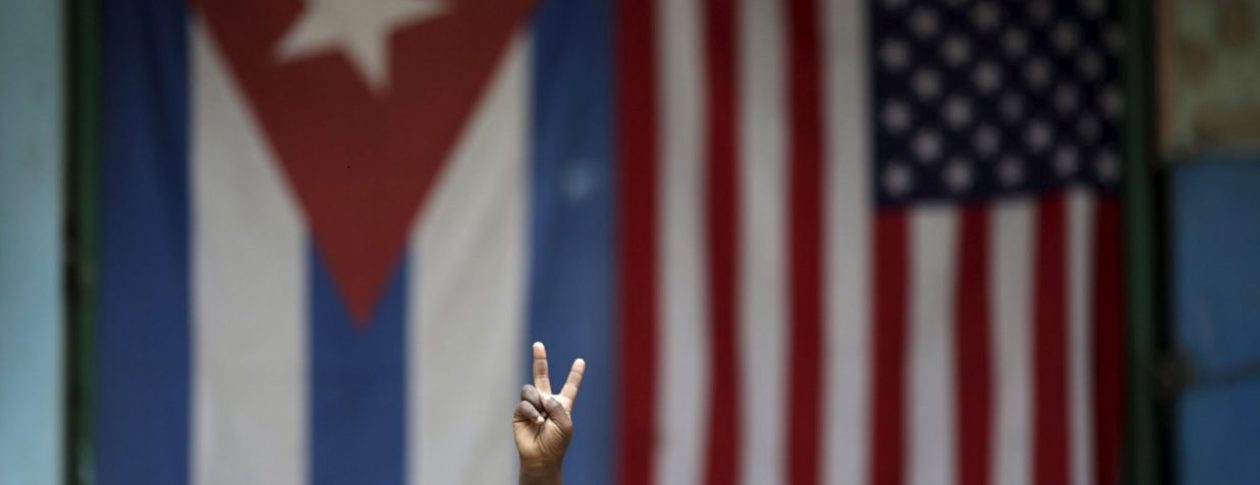
Cuban Foreign Minister denounces U.S. maneuver to undermine international support for an end to the blockade

Cuban Foreign Minister denounces U.S. maneuver to undermine international support for an end to the blockade
Yesterday afternoon, the United States permanent mission at the UN began circulating eight amendments to the Cuban resolution calling for an end to the blockade, reported Cuban Foreign Minister Bruno Rodríguez during a press conference at the ministry in Havana

Author: Daina Caballero Trujillo | informacion@granmai.cu
october 25, 2018 10:10:50f0023437


Photo: Cubaminrex
Yesterday afternoon, the United States permanent mission at the UN began circulating eight amendments to the Cuban resolution calling for an end to the blockade, reported Cuban Foreign Minister Bruno Rodríguez Parilla during a press conference at the ministry in Havana.

He reported that the amendments basically address aspects related to the UN’s 2030 Sustainable Development Goals, and the human rights issue, a subject that the U.S. government attempts to use to discredit Cuba – unsuccessfully.

What is most interesting, Rodríguez said, is not the content of the proposed amendments, but rather the fact that the document was circulated surreptitiously by the U.S. State Department, signed by deputy assistant secretary Gonzalo Gallegos, in an effort to dissuade UN member countries from voting in favor of the Cuban resolution calling for an end to the blockade, which will be considered in the General Assembly this coming October 31.

Continue reading Cuban Foreign Minister denounces U.S. maneuver to undermine international support for an end to the blockade

Permanent Representative of Cuba to the UN, Anayansi Rodríguez Camejo, denounces new anti-Cuban action

Permanent Representative of Cuba to the UN, Anayansi Rodríguez Camejo, denounces new anti-Cuban action
This Tuesday, the U.S. used the Economic and Social Council (ECOSOC) Chamber of the United Nations to attack Cuba, in contravention of the purposes and principles of the UN Charter

Author: Granma International news | informacion@granma.cu
october 17, 2018 09:10:21

f0023391


Photo: Permanent Mission of Cuba to the United Nations
TODAY, Tuesday 16 October, 2018, the United States of America has once again sullied the name of the United Nations.

The United States, in another action of contempt for human rights and this Organization, has preferred to create absurd lies about Cuba rather than recognize and promote a campaign to redress its multiple human rights violations, both in its territory and in the rest of the world.

With this action, which included the use of the ECOSOC Chamber and the United Nations WebCast, the name and emblem of the Organization was used in an act against a Member State, on the pretense of international support for its fallacious campaign. All of this contravenes the principles and purposes of the Charter.

It is clear the intention of the United States Government to sustain, with all available resources and without the slightest moral objection, the unilateral policy of economic, commercial and financial blockade imposed against Cuba and universally repudiated by the United Nations General Assembly for its criminal and genocidal nature, and therefore, in violation of international law.

Continue reading Permanent Representative of Cuba to the UN, Anayansi Rodríguez Camejo, denounces new anti-Cuban action

CONSTITUTIONAL REFORM, marriage as a “union between two people

CONSTITUTIONAL REFORM
The importance of families
The definition in the draft Constitution of marriage as a “union between two people” has been one of the most debated issues during the popular consultation process. Dr. Ana María Álvarez-Tabío Albo spoke to Granma regarding the arguments that support this decision

Author: Yudy Castro Morales | internet@granma.cu
october 9, 2018 12:10:42 

f0023331


Photo: Juvenal Balán
Is it advisable to speak about “the family” or rather “families”? Would it be valid to simply recognize “the family,” whatever its composition, or should we assume the plural as a blanket term to cover all the multiple family constructions that exist today?
Such questions fuelled a dialogue with Dr. Ana María Álvarez-Tabío Albo, professor at the University of Havana’s Law School, who prefers to talk about the family in the singular, “regardless of the way one chooses to organize it.” As such, she considers “the use of the plural (families) in the draft Constitution unnecessary.”
Dr. Álvarez-Tabío questions giving priority to “the institution of marriage by expressly mentioning it as a protected institution, among so many other ways in which a family can be organized.”
Specifically on marriage, Article 68 of the draft Constitution incorporates a remarkable change: the requirement that the two individuals who decide to enter matrimony must be of a different sex is eliminated; and maintained is the already achieved principle of equality between spouses in their rights to the personal and economic effects that derive from the legal/conjugal relationship.
Undoubtedly, according to professor Álvarez-Tabío, this has been “one of the most debated issues; however, without diminishing its importance, it must be awarded the attention it rightly deserves, without overlooking other topics, as more important, that affect us all as citizens.”
She adds that views on this change have been polarized into two main groups: “One which is ‘scandalized’ at the prospect of marriage between people of the same sex; and another that understands that equality has no distinctions based on personal reasons or circumstances of any kind.”

Continue reading CONSTITUTIONAL REFORM, marriage as a “union between two people