Declaración del Gobierno Revolucionario, El criminal bloqueo económico de EE. UU. contra Cuba

Sesenta años de la proclama que formalizó el criminal bloqueo económico de EE. UU. contra Cuba
Declaración del Gobierno Revolucionario

Autor: Granma | internet@granma.cu
2 de febrero de 2022 23:02:52
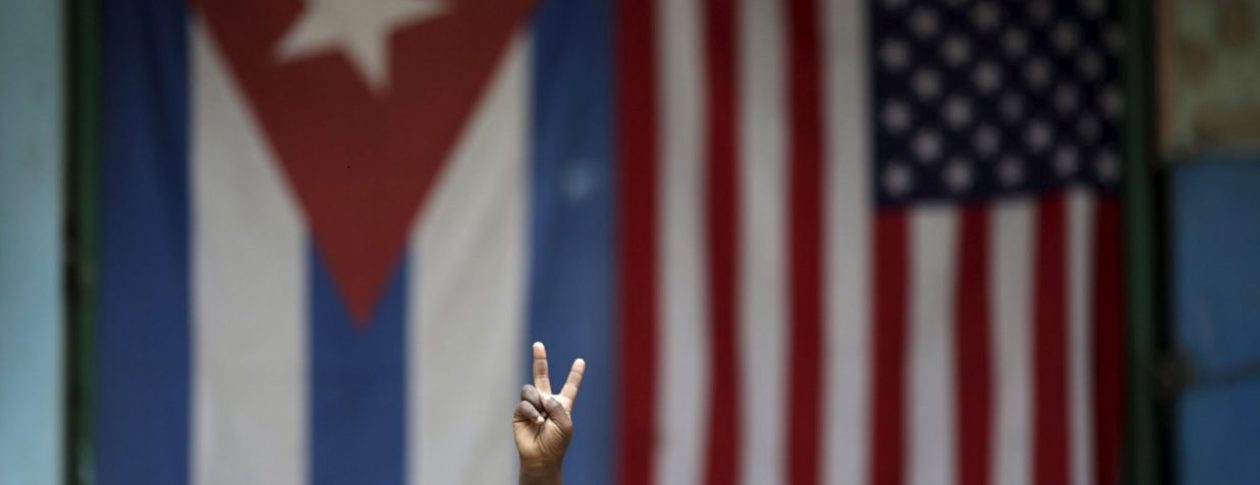
Monumento Bandera Cubana, frente a la Embajada de Estados Unidos, Malecon


Foto: Ariel Cecilio Lemus

El Gobierno Revolucionario denuncia la vigencia durante más de 60 años del bloqueo económico, comercial y financiero impuesto formalmente por EE. UU. el 3 de febrero de 1962. En esa fecha, el entonces presidente John F. Kennedy emitió la Proclama 3447, que decretó un “embargo” total del comercio con nuestro país al amparo de la sección 620 (a) de la Ley de Asistencia Exterior. Se le confirió de esa forma carácter oficial a las acciones económicas agresivas y unilaterales que se venían aplicando contra Cuba desde el triunfo revolucionario.

A partir de entonces, la política de cerco y asfixia económica se consolidó como eje central de la estrategia dirigida a coartar el derecho legítimo de los cubanos a defender su soberanía y forjar un proyecto emancipador, ajeno a la dominación imperialista.

La principal justificación que usó entonces EE. UU. para aplicar esta medida fue la relación de Cuba con los países socialistas, lo que supuestamente atentaba contra “los principios del sistema interamericano” y contra la seguridad estadounidense y hemisférica. A lo largo del tiempo, los pretextos han variado, pero los propósitos han sido los mismos.

La definición más exacta de los objetivos reales de la política hacia Cuba ya se había enunciado en el memorando del subsecretario de Estado, Lester D. Mallory, del 6 de abril de 1960: “provocar el desengaño y el desaliento mediante la insatisfacción económica y la penuria (…) debilitar la vida económica negándole a Cuba dinero y suministros con el fin de reducir los salarios nominales y reales, provocar hambre, desesperación y el derrocamiento del gobierno”.

Continue reading Declaración del Gobierno Revolucionario, El criminal bloqueo económico de EE. UU. contra Cuba

Blazing torches, for our national hero José Martí

Cuba’s youth alight brightly, for José Martí
Cuba was once again brightly lit, with blazing torches, for our national hero José Martí, on the eve of another anniversary of his birth, and with the energy of youth, accompanied by the leader of the Cuban Revolution, Army General Raul Castro Ruz, as well as Party First Secretary and President of the Republic Miguel Diaz-Canel Bermudez

Author: Maby Martinez Rodriguez | informacion@granmai.cu
january 28, 2022 10:01:09


Photo: Estudio Revolución
For the person who brought so much light to the homeland, there was light, across the country, in his honor.
Cuba was again brightly lit, with blazing torches, for our national hero José Martí, on the night of January 27. On the eve of another anniversary of his birth, the 169th, the homeland’s youth returned to the streets, accompanied by the leader of the Cuban Revolution, Army General Raul Castro Ruz, as well as Party First Secretary and President of the Republic Miguel Diaz-Canel Bermudez.
The clock had not yet struck eight, and the University of Havana’s Grand Stairway was filled with a sea of students who, under their masks, let the irrepressible energy of their age shine, yes, and also their commitment, as deep as it is joyful, to this Revolution of which they are essence, pillar and continuity.
This was emphasized by Karla Santana, president of the University Student Federation, when she called on her peers, this generation of young Cubans – who understand that our national project offers a universe of justice greater than any other offered by capitalism – to believe in the future.
The march, the traditional pilgrimage to the Fragua Martiana (where Martí was imprisoned as a rebellious adolescent) serves as a symbol of another march toward the inclusive ideals this young revolutionary generation defends.


Photo: Estudio Revolución

“We want and we must transform society, and do so to the beat of equity, of socialist democracy, people’s power, inclusion, to the beat of women, blacks, workers, neighborhoods, and humble consciousness,” stated Karla Santana, who invited, “those who dream, the foolish and the indispensable, the militants of life who live their youth afire,” to participate in this year’s tenth Congress of the Federation of University Students.
Then, over their heads, the torches were lit, and she advanced – accompanied also by Commander José Ramón Machado Ventura; the president of the National Assembly of People’s Power, Esteban Lazo Hernández; Comandante de la Revolución Ramiro Valdés Menéndez; Party Secretary of Organization and Cadre Policy, Roberto Morales Ojeda, and other leaders – in tight ranks, alight with the fire of youth, with the dream come true of those who marched for the first time, on January 27, 1953, with Fidel, on the occasion of Martí’s Centenary.

Why we don’t need more than one party

Why we don’t need more than one party
Excerpts from speech delivered by Comandante en Jefe Fidel Castro, July 26, 1988

Author: Fidel Castro Ruz | internet@granma.cu
may 13, 2021 09:05:38


Photo: Granma Archives
There is one very essential idea, and that is never to forget where we are situated, which is not in the Black Sea, but in the Caribbean, not 90 miles from Odessa, but 90 miles from Miami, with a border on our own land, in an occupied part of our territory, with imperialism. Our people are in charge in our country; and our Party is responsible for its policy, its line, its defense.

Our Party knows that mistakes bemade that weaken it ideologically… There will be nothing to weaken the authority of the Party! Without the Party no revolution is possible, without the Party no construction of socialism is possible!

And we must say here, once and for all, that we do not need more than one party, in the same way that Martí did not need more than one party to wage the struggle for the independence of Cuba, in the same way that Lenin did not need more than one party to make the October Revolution. I say this so that those who believe that here we are going to begin to allow parties in the pockets of someone else. To organize who? Counter-revolutionaries, the pro-Yankees, the bourgeoisie? No, here there is only one party, which is the party of our proletariat, of our peasants, of our students, of our workers, of our people, solidly and indestructibly united…

We do not need capitalist political formulas, that is complete garbage, they are useless, with their penchant for incessant politicking. I was talking about how, here, they demanded votes in for exchange medical attention; none of these phenomena exist now. We have created our own form of political organization appropriate to the country, we do not copy; People’s Power is our own form of organization…

We do not need to rectify anything at all, given that we have a very democratic system, much more democratic than all systems of the bourgeoisie, of millionaires, of the plutocracy which is, really, who governs, in general, in capitalist countries.

We have nothing to learn and we will not stray one iota from this path, on which power emanates from the people. And you know that our Party came from the people, it did not fall from the sky, and that our members are chosen among the best of the youth and among the best workers…

And you know very well what it means to be a Party member: It means being the first in everything when there is a difficult task, an internationalist mission, a sacrifice, a risk; taking the first shift, the first possibility is for the Party member, ours is not a party of the privileged, but a party born from the heart of the people, whose members must to serve as examples, and when they do not, the Party takes charge of removing them from its ranks.

The Party of national unity counts on the participation of all

The Party of national unity counts on the participation of all
The First Secretary of the Communist Party of Cuba, Miguel Díaz-Canel Bermúdez, led the second day of the Secretariat’s visit to the province of Sancti Spiritus.

Author: Pedro Jorge Velázquez | internet@granma.cu
Author: Mailenys Oliva Ferrales | internet@granma.cu
january 21, 2022 10:01:18


Photo: Estudios Revolución
In a socialist democracy, power must be socialized; the people have the capacity to construct the revolutionary project, with their daily work and criticism of what is poorly done. This is why the First Secretary of the Party Central Committee and President of the Republic, Miguel Díaz-Canel Bermúdez, is in Sancti Spiritus, leading a comprehensive visit by the Secretariat and its support staff, underway since January 19.
The anti-Cuban press speaks of elites, but it is Díaz-Canel and other members of the Secretariat, who are in modest neighborhoods and rural areas to understand the problems there, listening to residents and emphasizing the opportunity they have to join in making change.
His first stop was the Agramonte neighborhood in the Jesús María People’s Council, to review how much has been done since the 8th Congress, in this community in transformation.
There, the president visited the Sports and Recreation Complex, a medical office and produce market.
Next, Díaz-Canel moved on to Yaguajay, where he toured the Caonao Valley Agroindustrial Grain Enterprise. He was accompanied by Roberto Morales Ojeda, the Central Committee’s Secretary of Organization and Cadre Policy. They visited Batey Colorado, one of the four production poles affiliated with the company, which specializes in grain production and has mechanical irrigation.
There, Juan José González, the Ministry of Agriculture’s provincial representative, reported on the diversification of production. “Of the 5,214 hectare under cultivation, 3,000 are devoted to various crops: sorghum, beans, corn, root vegetables, fruits, greens… for the state wholesaler. They also deliver 800,000 liters of milk annually.”
The delegation also visited the center’s rustic greenhouses, where they confirmed the quality of productions and the export capacity being developed.
Díaz-Canel and Morales Ojeda then visited the Melanio Hernández sugar mill in Tuinucú, where they conversed with workers about the plant’s electrical generation system based on organic waste and the sale of energy to the Electric Company, essential to boosting the mill’s efficiency.
At the end of the afternoon, Díaz-Canel and Morales Ojeda met with professors and students of José Martí University of Sancti Spíritus, where they listened to the experiences and contributions being made to the agricultural and industrial sectors in the province.
Rogelio Polanco, another member of the Secretariat and head of the Central Committee’s Ideological Department, met with university students in the morning, as well, and visited media outlets, the Casa de la Guayabera, the Colmenita Espirituana children’s theater project and the Oscar Fernandez Morera Gallery.

Photo: Estudios Revolución


Photo: Estudios Revolución